Phone Number
+91 9108788989
Email
contact@biostarlifetech.com

CellDETACH™ Temperature-Responsive Cell Culture Surface

CellDETACH™ Temperature-Responsive Cell Culture Surface

Products:
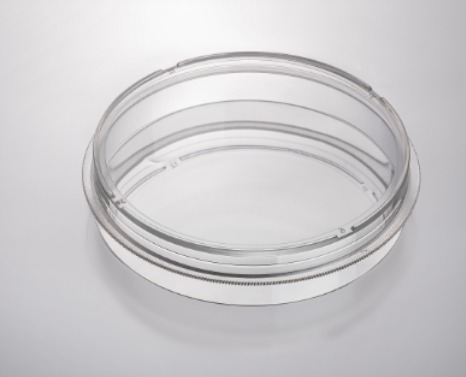
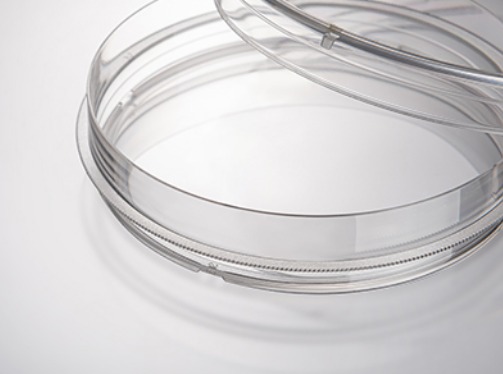
CellDETACH Thermosensitive Cell Culture Dishes: 100 mm
CellDETACH Thermosensitive Cell Culture Flasks: T182(Extended)

Product Information

Using trypsin digestion or cell scrapers to separate adherent cells can affect the expression of cell surface proteins, damage cells and reduce cell viability.
The CellDETACH products have a thermosensitive surface, which is coated with a unique nanopolymer. When the temperature decreases from 37°C to 4°C, the thermosensitive surface gradually changes from slightly hydrophobic to hydrophilic, allowing for the harvest of adherent cells without trypsin. By using this gentle collection method, the cells are safe from injuries caused by trypsin or scrapers, thus preserving high viability and the integrity of surface receptors and cell antigens. This operation enables cells to be harvested without damage for subculturing.
 

Features

The CellDETACH thermosensitive cell culture surface is specially designed by our R&D team for cell passage and cell transplantation, and has been granted a national invention patent (Patent Number: ZL201510780506.3). The goal is to help researchers harvest cell sheets, set up 3D tissue models formed by normal cell binding and extracellular matrix linkage, simplify cell culture and tissue engineering techniques, and minimize experimental manipulation time.
Features
China Invention Patent Award (Patent Number: ZL201510780506.3)
Induces cell shedding simply by lowering the temperature - straightforward, fast, and easy to operate
No trypsin: preserves cell surface proteins and markers integrity
No cell scraping: avoids mechanical damage to cells and ensures high cell viability
Optimized cell culture and tissue engineering techniques


Instructions for Use In Vitro Cell Culture
Cells can adapt quickly to a serum-free or low-serum culture environment, meeting the needs of experiments that have to eliminate the interference of serum components or that require reduced serum levels, thus saving cost of cell culture
When the temperature goes below 32°C, the thermosensitive coating on the surface is in a stretched polymer state, which will bind water molecules and expand, showing hydrophilicity. This facilitates the shedding of adherent cells. The shedding efficiency will be at its best when the temperature drops below 4 °C.
When the temperature of the thermosensitive cell culture surface drops below 32°C, excessive disturbance may cause cells to fall off, so please do not spend too much time taking pictures and observing while performing the cell culture.
Cell Harvest
The best harvest is achieved when the confluence of cells is higher than 80%.
When harvesting cells, either the environmental temperature should be reduced to 4 ℃ , or the thermosensitive products should be placed in a sterile incubator at 4 ℃, or the culture can be replaced with a 4 °C culture medium.
When the temperature of the thermosensitive Cell Culture Surface drops to 4 ℃, keep it for 20 ~ 30 minutes, then aspirate the culture medium above the thermosensitive Cell Culture Surface with a straw (cell culture dish), pipette or electric pipette (600ml Cell Culture Flask), and blow over the cells attached to the culture surface to make them fall off. During the blowing process, the cell sheet can be observed falling off the thermosensitive surface.
The thermosensitive shedding abilities of cells depends on their adhesion performances, and some cells with strong adherence may have difficulty falling off, requiring multiple blowing attempts. (for example, those digested at 37 ℃ for more than 3 minutes with 0.25% trypsin digestion are considered to be cells with strong adherence ability).
Scope of Application

The thermosensitive cell culture surface is suitable for the in vitro culture of most adherent cells, including stem cells, neural cells, macrophages, and cancer cells. It is ideal for harmless cell harvesting, and can be widely used in expanded cell culture, cell therapy, 3D tissue modeling, extracellular matrix research and other fields.

Storage and Transportation

This product should not be exposed to direct sunlight or excessive heat for a long time, but can be stored and transported at room temperature.

Material

Flask/Plate/Dish Body

Polystyrene (PS)

Flask Cap

High-density Polyethylene (HDPE)

Filter Membrane

Polytetrafluoroethylene (PTFE)

Conforming to USP Class VI standards

Order Information

Cell Culture Dishes

Cat. No.Diameter(mm)SterileAppro.Cell Growth Area (cm²)PackagingQty. Per Pack(Blister)Qty. Per Case
CDD022100100Y60.8Blister124
CDD023100100Y60.8Pack5100

Cell Culture Flasks

Cat.No.Volume (mL)Cell Culture Surface Area (cm2)Recommended Working Volume(mL)Maximum Working Volume (mL)Cap StyleDimensions(mm) LDimensions(mm) WDimensions(mm) HDimensions(mm) B.N.D*SterileQty. Per BagQty. Per Case
CDF024600600182(Extended)36.4-54.6200Vent219.3115.849.529.5Y120
CDF023600600182(Extended)36.4-54.6200Vent219.3115.849.529.5Y540
CDF014600600182(Extended)36.4-54.6200Plug Seal219.3115.849.529.5Y120
CDF013600600182(Extended)36.4-54.6200Plug Seal219.3115.849.529.5Y540

Frequently Asked Questions

What does TC-treated in the product name mean?
TC-treated means that Tissue Cultured is used to treat the surface. By means of corona discharge or gas plasma, Jet Biofil can improve the hydrophilicity of polystyrene (PS) surface, improve the adhesion of proteins needed for cell adhesion, and thus help cells adhere to the wall.
Which surface should I use to culture suspension cells?
The suspension cells do not have the need for cell adhesion, and generally the culture supplies for untreated surface can be used. TC-treated surface can also culture suspension cells, but according to the state and type of cells, some cells may appear adhesion phenomenon.
If I want to coat extracellular matrix myself, what kind of surface should I use?
You can choose the culture vessel with untreated surface to coat the extracellular matrix by yourself. Of course, in this case, vessels with TC-treated surface can also be used
How to use the cell culture bottle with a sealed cap? What are the differences between the use of cell culture bottles with filter membrane caps?
Cell culture bottles with sealed caps provide a closed cell culture environment. If it is needs to connect with the air in the incubator, it is necessary to slightly loosen the cap after the bottle is put into the incubator to allow air to enter. Similarly, when taking out the bottle, tighten the cap first and then take it out. The cap with the filter membrane itself has the function of breathable, and the filter membrane can prevent microbial contamination. Therefore, the cap of the culture bottle can be directly tightened and put into the incubator during use, but it needs to be noted that the filter membrane on the cap cannot be wet, wet filter membrane cannot ensure the passage of gas.
What does T25, T175 mean that I often hear?
Taking T25 as an example, it refers to a cell culture bottle with a growth surface area of 25 cm2. According to the type of bottle cap and different culture surfaces, different article numbers correspond to different products.
I bought the product with article number xxxxxx. What is its growth area? How much medium should I add to culture my cells?
We recommend using 0.2-0.3mL/cm2 of medium
The cell culture bottle/dish I bought is not vacuum packed. The bag looks loose. Is there a quality problem?
The cell culture supplies of Jet Biofil are not vacuum packed, and are only manually aspirated for convenient transportation, so there will be differences. In addition, the temperature and air pressure in different regions will also affect the tightness of the packaging. If there is no air leakage in the package and the cap does not fall off from the product, it will not affect the sterility of the product and the quality of the product. Please feel relieved the use. If the package is damaged or the air leaks or the cover falls off from the product, please take a photo and submit a complaint through your dealer. At the same time, please pay attention to provide a photo of the outer box of the product. When you receive the goods, please carefully confirm whether the outer box is damaged or deformed.
I can’t use up a package of culture supplies in one experiment. How should I preserve it?
We cannot guarantee the sterility of the product after opening. We suggest that you store it in a sterile environment, control the temperature and humidity of the environment, and avoid the storage under light/ultraviolet irradiation.
I used the culture bottle/dish/plate of Jet Biofil, and the cells did not adhere to the wall. Is it a product quality problem?
There are many factors that lead to non-adherent cells, such as culture medium composition and pH value, culture environment, digestion operation, cell type, cell passage, etc. If you use the same product with the same article number to culture the same cell strain for a long time, and the cells adhere normally before, but do not adhere to the wall now, it is recommended that you timely record the batch number of the products used in both cases, and conduct repeated parallel experiments, that is, use cells from the same source to spread on the supplies of these two batches for culture (pay attention to using the culture medium from the same source). Culture in the same incubator to determine the main reason why cells do not adhere to the wall.
The color of the culture bottle/dish/plate I bought this time is more yellow than that of last time. Is it a product quality problem?
It is normal that plastic consumables of different batches may turn yellow after irradiation sterilization.
Call Now Button