Phone Number
+91 9108788989
Email
contact@biostarlifetech.com

ELISA Plates

ELISA Plates

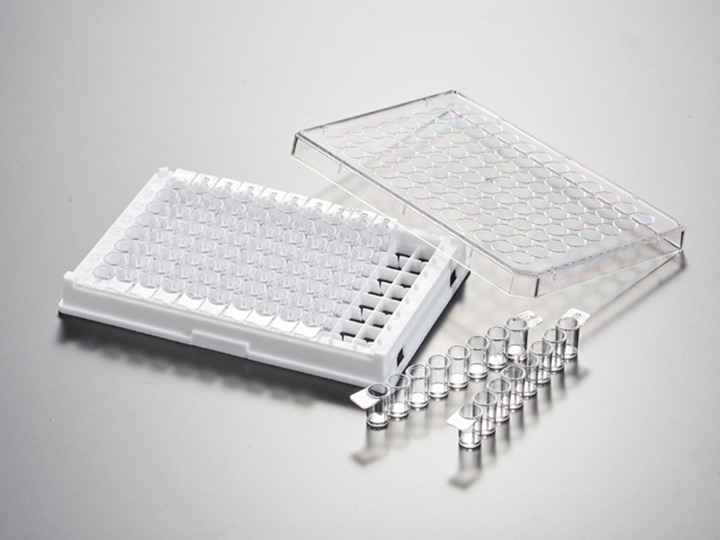
Specification: 96-well non-removable plate   96-well removable plate (fitted with 8-well strip or 12-well strip)
Binding Force: High binding force   Moderate binding force

Product Information

As an important tool for ELISA (enzyme linked immunosorbent assay) experiments, ELISA plates are made of PS. Antigens, antibodies and biomolecules are binding on the bottom surface of the plate by means of hydrophobic and ionic bonds. The plates are mainly used in disease and food safety diagnosis.

The ELISA plates from Jet Biofil are made with internationally advanced surface treatment technologies and manufacturing processes for high polymer materials, and show stable protein-binding properties. They can be used as safe, reliable and effective carriers during ELISA experiments, and in conjunction with immune and genetically modified products, as well as for clinical diagnosis.
 

Even pore diameter and thickness, ensuring good experimental accuracy and repeatability

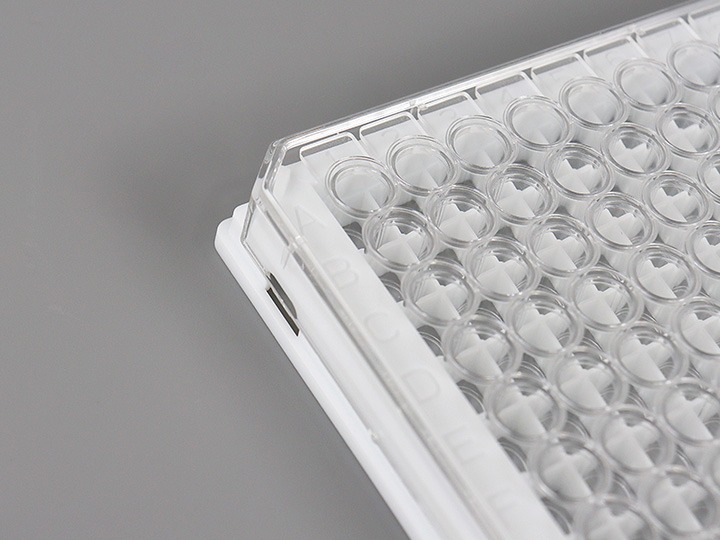
Clearly marked with letters and numbers, to distinguish samples in different wells

ELISA Plates Features

Features
Unique surface treatment process for higher protein adsorption properties
2 binding forces available: High binding force (300~400ng/cm²), and moderate binding force (200~300ng/cm²)
8-well and 12-well strips are provided to match the ELISA plates and for better cost-effectiveness
Designed with a flat bottom and divided into removable and non-removable structures, to satisfy different experimental applications
DNase/RNase-free, non-pyrogenic
Features
Even well diameter and thickness, ensuring high experimental accuracy and repeatability
Transparent plate, with a CV value <5%, higher measurement flexibility, widely used in colorimetric determination
Clearly marked with letters and numbers, to distinguish the samples in different wells
Dimensions conform to SBS international standards, and are stable for most brands of ELISA equipment
Sterilized by irradiation, SAL 10-6
High binding force ELISA plate
The plate undergoes surface treatment to increase protein binding force, up to 300~400ng/cm² (IgG); molecular weight of binding protein: >10kD. This type of ELISA plate can improve sensitivity and reduce the coing protein concentration and usage. If they were not present, the non-ionic detergent to fail to blocking the binding protein, nonspecific reactions could occur, meaning the protein would need to be used as a blocking agent
Moderate binding force ELISA plate
The ELISA plate binds with proteins through hydrophobic bonds on the surface, and is suitable for use as a solid phase carrier to macromolecule proteins with a molecular weight >20kD, protein binding capability is 200-300ng /cm²(IgG). As the ELISA plate only displays macromolecular binding, it is also suitable as a solid phase carrier for unpurified antibodies or antigens. Proteins or non-ionic detergents can be used as blocking liquid on these plates

Material

Non-removeable Plate & Stripe

Polystyrene (PS)

Removeable Plate Frame

High Impact Polystyrene (HIPS)

Conforming to USP Class VI Standards

Order Information

Removable Stripes

Cat No. Specification Binding Capacity Description Sterile Qty. Per Bag(Box) Qty. Per Case
FEP100012 12-well strip High Binding Flat Bottom
(Fit with Removable Plate Frame)
Y 40 1600
FEP100008 8-well strip Y 60 2400
FEP200012 12-well strip Medium Binding N 40 1600
FEP200008 8-well strip N 60 2400

ELISA Plates

Cat No. Specification Binding Capacity Description Sterile Qty. Per Bag(Box) Qty. Per Case
FEP100096 96-well High Binding Fixed flat bottom Y 10 200
FEP111096 Fixed flat bottom, with top Y 10 200
FEP101896 Detachable flat bottom, with 8×12 strips Y 10 200
FEP101296 Detachable flat bottom, with 12×8 strips Y 10 200
FEP200096 Medium Binding Fixed flat bottom N 10 200
FEP201896 Detachable flat bottom, with 8×12 strips N 10 200
FEP201296 Detachable flat bottom, with 12×8 strips N 10 200

Frequently Asked Questions

Size information of commonly used microwell plates?
The well plate size of this series conforms to ANSI/SBS well plate size standard, American National Standards Institute (ANSI ) and Society for Biomolecular Sciences (SBS, now affiliated to the Society for Laboratory Automation and Screening ( SLAS))
What is the chemical resistance of microwell plate?
In general, well plates are used for solution and cell culture. If organic solvents are involved, please confirm and verify the well plates according to the specific material of its before use.
What is the range of centrifugal force that the microwell plate can withstand?
We recommend that the centrifugal force not exceed 1,300 g. If there are other treatments affecting the mechanical strength of the well plate before centrifugation, the above suggestions may not be applicable. Please test and verify before use.
Does the deep well plate can be applied to cell culture?
It’s mainly used for sample treatment and preservation. The surface made of polypropylene has not been treated, and we have not tested it for cell culture. So it is recommended that you pre-test for specific applications and conditions before conducting relevant experiments.
Call Now Button