Phone Number
+91 9108788989
Email
contact@biostarlifetech.com

Cell and Tissue Culture Plates

Cell and Tissue Culture Plates

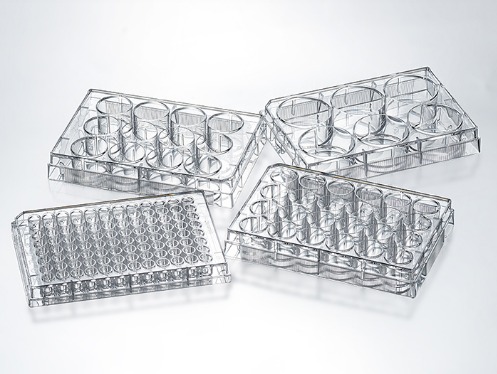
Specification: Single well   4-well   6-well   12-well   24-well   48-well   96-well   96-well (detachable)   384-well
Bottom Type: Flat    U-shaped
Surface: Non-treated    TC-treated   CellATTACH®-treated
Packaging: Blister Pack

Product Information

We supply premium cell culture plates with a range of specifications and surfaces for experimental research, optimization and analysis to deliver the best outcomes for cell culture and subsequent cell assays, such as cell transfection, immunofluorescence, and clone formation. Assisting with experimental research, optimization and analysis. Surface-untreated plates are suitable for suspension cell cultures, and those with a TC-treated surface are suitable for common adherent cell lines due to the excellent hydrophilicity of the polystyrene surface. The CellATTACH® superhydrophilic treated surface represents a technical advancement that OR and allows better adhesion and proliferation of fastidious cells as well as primary or transfected cell lines under low serum/serum-free conditions.

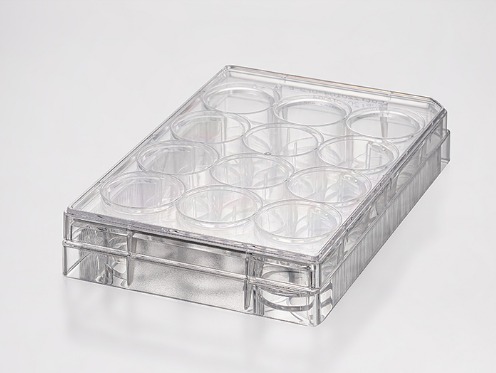
Stacking design to save space

One-way cover that facilitates holding

Alphanumeric labels facilitate identification and recording

Flat plate bottom, consistent well size, uniform and transparent plate, easy for microscopic observation

Cell and Tissue Culture Flasks Features

Features
Uniform thickness of plate bottom and well size
Plates with U-shaped bottom are suitable for suspension culture, chemical and analytical experiment, or sample preservation. The detachable 96-well plate is suitable for experimental analysis
Transparent material facilitates observation under a microscope
Plate cover and plate body fit tightly, thus reducing contamination of the medium or evaporation loss during the cell culture process
The ergonomically designed one-way cover can be held easily, reducing mistakes
Features
The well edge design prevents cross-contamination, with alphanumeric markers to facilitate identification and marking
Stackable - space saving and compatible with most multi-well plate instruments and equipment
Lot No. printed at the sides of the plate and package bag facilitates quality traceability
Sterilized by irradiation, SAL 10-6
DNase/RNase-free, non-pyrogenic and non-cytotoxic

Material

Polystyrene (PS)

Conforming to USP Class VI standards

Order Information

Cell and Tissue Culture Plates, Non-treated, in Blister Box

Cat. No.Surface TypeSpecification (Well)Bottom TypeMax. Working Volume of a Single Well (mL)Recommended Working Volume of a Single Well (mL)Qty. Per BagQty. Per Case
TCP001001Non-treatedSingle wellFlat9035.01100
TCP001004Non-treated4Flat1.861.01100
TCP001006Non-treated6Flat171.9-2.91100
TCP001012Non-treated12Flat6.80.76-1.141100
TCP001024Non-treated24Flat3.50.38-0.571100
TCP001048Non-treated48Flat1.550.19-0.291100
TCP001096Non-treated96Flat0.390.075-0.21100
TCP002096Non-treated96U-shaped0.330.075-0.21100
TCP001896Non-treated96 (detachable, with 8-well strips)Flat0.390.075-0.21100
TCP001384Non-treated384Flat0.1450.01-0.11100

Cell and Tissue Culture Plates, with TC-treated, in Blister Box

Cat. No.Surface TypeSpecification (Well)Bottom TypeMax. Working Volume of a Single Well (mL)Recommended Working Volume of a Single Well (mL)Culture Area of a Single Well (cm2)Qty. Per BagQty. Per Case
TCP011001TC-treatedSingle wellFlat9035971100
TCP011004TC-treated4Flat1.8611.961100
TCP011006TC-treated6Flat171.9-2.99.61100
TCP011012TC-treated12Flat6.80.76-1.143.851100
TCP011024TC-treated24Flat3.50.38-0.571.931100
TCP011048TC-treated48Flat1.550.19-0.290.831100
TCP011096TC-treated96Flat0.390.075-0.20.331100
TCP012096TC-treated96U-shaped0.330.075-0.20.581100
TCP011896TC-treated96 (detachable, with 8-well strips)Flat0.390.075-0.20.331100
TCP011384TC-treated384Flat0.1450.01-0.10.111100

Cell and Tissue Culture Plates, CellAttach® Treated, in Blister Box

Cat. No.Surface TypeSpecification (Well)Bottom TypeMax. Working Volume of a Single Well (mL)Recommended Working Volume of a Single Well (mL)Culture Area of a Single Well (cm2)Qty. Per BagQty. Per Case
CAP011006CellAttach® Treated6Flat17.01.90~2.909.61100
CAP011012CellAttach® Treated12Flat6.800.76~1.143.851100
CAP011024CellAttach® Treated24Flat3.500.38~0.571.931100
CAP011048CellAttach® Treated48Flat1.600.19~0.290.841100
CAP011096CellAttach® Treated96Flat0.40.08~0.200.331100
CAP012096CellAttach® Treated96U-shape0.330.08~0.200.581100

Frequently Asked Questions

What does TC-treated in the product name mean?
TC-treated means that Tissue Cultured is used to treat the surface. By means of corona discharge or gas plasma, Jet Biofil can improve the hydrophilicity of polystyrene (PS) surface, improve the adhesion of proteins needed for cell adhesion, and thus help cells adhere to the wall.
Which surface should I use to culture suspension cells?
The suspension cells do not have the need for cell adhesion, and generally the culture supplies for untreated surface can be used. TC-treated surface can also culture suspension cells, but according to the state and type of cells, some cells may appear adhesion phenomenon.
If I want to coat extracellular matrix myself, what kind of surface should I use?
You can choose the culture vessel with untreated surface to coat the extracellular matrix by yourself. Of course, in this case, vessels with TC-treated surface can also be used
How to use the cell culture bottle with a sealed cap? What are the differences between the use of cell culture bottles with filter membrane caps?
Cell culture bottles with sealed caps provide a closed cell culture environment. If it is needs to connect with the air in the incubator, it is necessary to slightly loosen the cap after the bottle is put into the incubator to allow air to enter. Similarly, when taking out the bottle, tighten the cap first and then take it out. The cap with the filter membrane itself has the function of breathable, and the filter membrane can prevent microbial contamination. Therefore, the cap of the culture bottle can be directly tightened and put into the incubator during use, but it needs to be noted that the filter membrane on the cap cannot be wet, wet filter membrane cannot ensure the passage of gas.
What does T25, T175 mean that I often hear?
Taking T25 as an example, it refers to a cell culture bottle with a growth surface area of 25 cm2. According to the type of bottle cap and different culture surfaces, different article numbers correspond to different products.
I bought the product with article number xxxxxx. What is its growth area? How much medium should I add to culture my cells?
We recommend using 0.2-0.3mL/cm2 of medium
The cell culture bottle/dish I bought is not vacuum packed. The bag looks loose. Is there a quality problem?
The cell culture supplies of Jet Biofil are not vacuum packed, and are only manually aspirated for convenient transportation, so there will be differences. In addition, the temperature and air pressure in different regions will also affect the tightness of the packaging. If there is no air leakage in the package and the cap does not fall off from the product, it will not affect the sterility of the product and the quality of the product. Please feel relieved the use. If the package is damaged or the air leaks or the cover falls off from the product, please take a photo and submit a complaint through your dealer. At the same time, please pay attention to provide a photo of the outer box of the product. When you receive the goods, please carefully confirm whether the outer box is damaged or deformed.
I can’t use up a package of culture supplies in one experiment. How should I preserve it?
We cannot guarantee the sterility of the product after opening. We suggest that you store it in a sterile environment, control the temperature and humidity of the environment, and avoid the storage under light/ultraviolet irradiation.
I used the culture bottle/dish/plate of Jet Biofil, and the cells did not adhere to the wall. Is it a product quality problem?
There are many factors that lead to non-adherent cells, such as culture medium composition and pH value, culture environment, digestion operation, cell type, cell passage, etc. If you use the same product with the same article number to culture the same cell strain for a long time, and the cells adhere normally before, but do not adhere to the wall now, it is recommended that you timely record the batch number of the products used in both cases, and conduct repeated parallel experiments, that is, use cells from the same source to spread on the supplies of these two batches for culture (pay attention to using the culture medium from the same source). Culture in the same incubator to determine the main reason why cells do not adhere to the wall.
The color of the culture bottle/dish/plate I bought this time is more yellow than that of last time. Is it a product quality problem?
It is normal that plastic consumables of different batches may turn yellow after irradiation sterilization.
Call Now Button